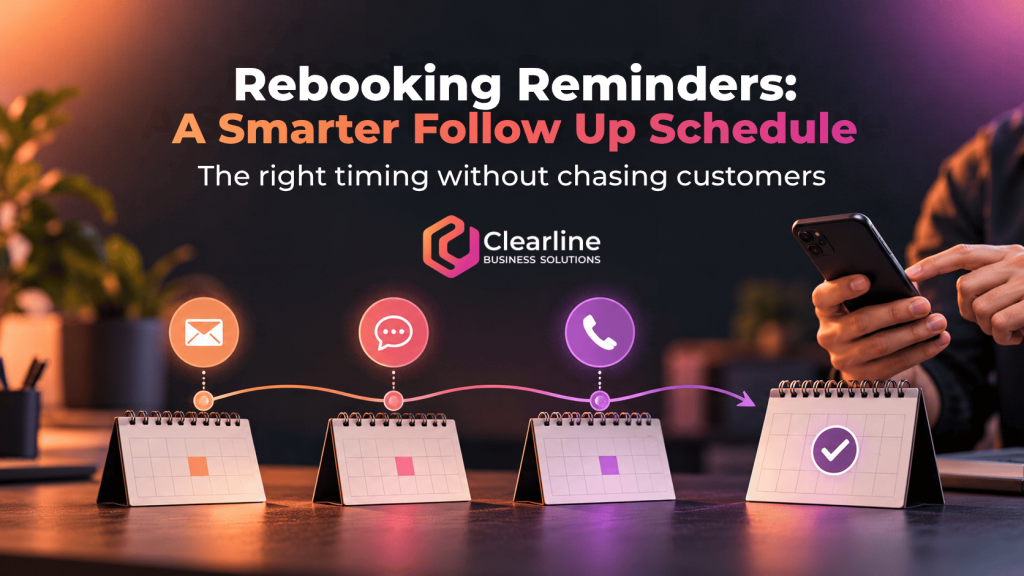

If your Lethbridge construction or manufacturing business sends quotes that disappear into an inbox, the solution is rarely another generic reminder email. A commercial buyer may be waiting for a project award, engineering approval, a revised specification, a purchase order, or a production date. Effective Lethbridge quote follow-up keeps those dependencies visible and gives every open quote an owner and a meaningful next action.
The basic rule is simple: before a quote is sent, agree on what decision it supports and when the buyer expects to make it. After it is sent, record the version, stakeholders, open questions, decision milestone, and next contact. Review the resulting queue weekly. The point is to understand what is actually happening, not to pressure every buyer on the same schedule.
This guide is for project-based contractors, subcontractors, fabricators, equipment suppliers, and other B2B firms whose quotes may pass through several people before work is awarded. It is deliberately narrower than our general sales follow-up system guide, which covers leads and proposals across many types of businesses.
Why Lethbridge quote follow-up needs a B2B approach
Lethbridge has a substantial goods-producing economy. Economic Development Lethbridge's August 2026 employment data lists construction and manufacturing among the three leading goods-sector employers in the metropolitan area. The City's 2026 economic development strategy identifies agrifood, advanced manufacturing, transportation, and logistics as priority sectors. Economic Development Lethbridge also describes manufacturing as a significant regional employer and exporter in its manufacturing impact summary.
These facts do not prove that every local firm has the same sales cycle. They do explain why a guide built only around a homeowner approving a straightforward estimate would miss important local use cases. A fabricator may need a drawing revision before confirming price. A subcontractor may bid to several general contractors on one project. A supplier may be waiting for a purchase order after a buyer's internal review. Lethbridge quote follow-up should track those conditions instead of interpreting every quiet period as a lost sale.
The practical distinction is the unit of work. A contact record tells you whom you know. An opportunity record tells you what could be sold. The quote record tells you exactly which scope, version, price, validity date, and decision process the buyer is reviewing. If these three are disconnected, the salesperson can send a perfectly polite follow-up about a price that has already changed.
Start before the quote goes out
The best moment to set a follow-up date is while the buyer is still explaining the request. Ask what the quote will be used for. Is it a budget estimate, a formal RFQ, a tender submission, a replacement option, or a final purchase decision? Ask who else needs to review it, what information they need, and what event triggers the decision. The answers determine both the level of effort to invest and the appropriate next contact.
For a project bid, record the tender close, expected award window, bid number, project name, and your role in the supply chain. For a custom manufacturing request, record specifications, drawing revision, quantities, tooling assumptions, lead time, freight or installation scope, and any technical approval still pending. For recurring work, distinguish the first order from a potential standing arrangement. None of these requires a bloated form. Capture only information that changes a decision or handoff.
A useful question is: "Once you have the quote, what needs to happen before you can decide?" A second is: "When would it be useful for me to check whether the scope or timing has changed?" These questions make Lethbridge quote follow-up part of the buyer's process, rather than a surprise sales sequence after delivery.
Do not promise capacity, delivery timing, or a fixed price when those depend on material availability, site conditions, or a changing specification. State the assumptions in the quote, including how long the pricing remains valid. If a critical detail is unknown, flag it for review rather than burying it in a follow-up email.

Give each open quote one accountable owner
Several people may touch a quote. An estimator prices it, a manager approves margin, an account lead communicates with the buyer, and operations checks delivery. Shared input is useful. Shared accountability is often not. Assign one person to own the commercial next step and make the handoff explicit if that person changes.
The owner does not need to answer every technical question personally. Their job is to know which answer is outstanding, who will provide it, when it is due, and whether the buyer has been told. Lethbridge quote follow-up breaks when the quote is marked "sent" and nobody is responsible for finding out what happened next.
Set a minimal record standard for every active opportunity:
- Buyer organization, project or RFQ name, primary contact, and other decision participants.
- Quote number, current version, sent date, expiry date, value range, and link to the authoritative document.
- Current stage and reason for delay, if any.
- One owner, one dated next action, and the purpose of that action.
- Decision milestone, expected award or order date, and any external dependency.
- Scope assumptions, open technical questions, and the last meaningful buyer response.
If a small company cannot maintain these fields consistently, adding more fields will not rescue it. Start with owner, current version, blocker, and next action. Improve the record only after the team uses the basics. The goal is a reliable work queue, not perfect data entry for its own sake.
Separate quote status from the buyer's decision status
"Quote sent" is an event, not a useful description of every open opportunity. A sent quote may be waiting for confirmation of receipt, an engineering answer, a revised bill of materials, tender award, budget approval, a procurement document, or a revised start date. If they all sit in one stage, a pipeline report cannot tell the team what to do.
Keep the stages simple, but give them operational meaning. A practical path could be qualified request, pricing in progress, quote sent, clarification or revision, decision pending, verbal approval, won and handed off, lost, or deferred. Use a separate reason field for the specific blocker. That avoids dozens of stages while still allowing someone to filter all quotes awaiting technical input or an award date.
Lethbridge quote follow-up should also distinguish "waiting on us" from "waiting on the buyer." If your team owes a revised drawing or corrected freight estimate, another automated check-in asking the buyer whether they decided is actively unhelpful. A weekly review should surface your own overdue commitments first.
Consider a quoted fabrication job that receives a revised drawing two days after pricing. The original quote remains part of the history, but it must no longer look like the current offer. Link the versions, explain the change, identify who approved the new scope, and move the next task to the appropriate technical owner. Only then should the commercial owner ask the buyer about its decision timeline.
Build a cadence around milestones, not an arbitrary day count
There is no universal three-email sequence for construction and manufacturing quotes. A short-turn replacement part, a subcontracting bid, and a custom production run have different decision clocks. Use the timing already learned from the buyer and the event that makes the next contact useful.
For a straightforward quote, confirm receipt within a reasonable business interval if the buyer has not acknowledged it. For a formal tender, respect the procurement process and contact rules. A reminder before an announced bid close may be pointless or inappropriate; a check after the expected award date may be useful if contact is permitted. For a custom product, the next action may be to resolve a technical question or validate a lead time before asking for a purchase decision.
A practical Lethbridge quote follow-up cadence has three layers. First, an internal task makes sure the quote arrived and no information is missing. Second, a buyer-specific contact happens at the agreed decision milestone. Third, a later review either advances the opportunity, records a realistic new date, or closes it. A deferred project should not receive the same messages as a buyer actively comparing final bids.
When there is no agreed date, ask one direct question tied to the decision: "Has the project award timeline changed, or is the current scope still under review?" If the buyer gives a date, use it. If repeated contacts produce no response, make a respectful final attempt and move the opportunity out of the active forecast. Do not equate a full pipeline with a healthy one.
Match the message to the actual blocker
"Just checking in" asks the buyer to reconstruct the whole conversation. A useful follow-up names the project, current quote version, and the specific decision or unanswered question. It should make a response easy without inventing urgency.
Here are three illustrative messages, each for a different stage. Adapt them to the buyer and any tender communication restrictions:
For confirmation: "I sent revision B of the pump assembly quote on Tuesday. Can you confirm it came through and that the installation scope matches what your team needs? I can clarify the lead-time assumption if helpful."
For a decision milestone: "You mentioned your project team expected to confirm the award this week. Has that timing changed? If the scope is still active, I can verify current capacity before you issue the purchase order."
For a revision: "The drawing you sent Thursday changes the mounting dimensions. Our estimator is checking the material and labour impact, and I will send an updated quote by Monday. Please use the new revision for approval rather than the previous version."
Each message has a reason to exist. If the only reason to send a message is that a timer fired, review the record first. For high-value or complex opportunities, a phone conversation may surface concerns faster, followed by a written summary that keeps the record accurate. When a buyer requests email-only communication, respect it. A CRM can remind the owner when to act; it cannot decide what changed in the project.
Track stakeholders without losing the relationship
A construction quote may go to a project manager, estimator, general contractor, procurement team, and eventual owner. A manufacturing quote may involve engineering, operations, quality, finance, and purchasing. Recording only the person who requested pricing makes the process look simpler than it is.
For Lethbridge quote follow-up, identify the person who can clarify scope, the person who can authorize the order, and any party whose approval changes timing. Do not assume that the first contact is the final decision-maker. Record each person's role and the buyer's preferred communication path. In a formal bid, bypassing the designated contact could damage the relationship or breach tender instructions.
Stakeholder tracking also helps when the primary contact changes jobs or is away. An accurate project history lets another employee continue a conversation without asking the buyer to resend drawings or repeat decisions. The record should make handoffs easier while respecting confidential information and access permissions.
When a quote was requested by a general contractor who has not won the underlying project, treat your opportunity as conditional. Do not forecast it as committed revenue because the contractor said your price was competitive. Record the upstream award as a dependency and set the next contact around that milestone.
Handle revisions as part of the same opportunity
A revised quote is often a normal part of B2B selling, not evidence that the process failed. What matters is whether the team can identify the current version and explain why it changed. Maintain one opportunity for the commercial decision, with linked quote revisions and clear superseded versions. If the customer has asked for genuinely separate work packages, model them separately so one award does not incorrectly close the other.
Lethbridge quote follow-up can go badly when sales sends a reminder against version one while operations is pricing version three. Give the latest document an unmistakable identifier, record the revision reason, and pause any generic messages while a change is being prepared. Confirm whether the revision resets price validity, lead time, decision date, or internal approval.
Before releasing a new version, check that technical and commercial assumptions agree. An estimator may have priced the change correctly while the delivery date in the covering email still reflects the previous scope. A quick review is cheaper than explaining conflicting commitments after the buyer has issued an order.
If revisions are frequent, measure why. Some are healthy collaboration. Others signal unclear discovery, a weak quote template, missing site details, changing customer specifications, or inadequate qualification. Fix the upstream cause rather than celebrating a faster reminder sequence.

Protect the handoff after a verbal yes
A verbal approval is encouraging, but it may not authorize purchasing material or starting work. Define what "won" means for your business. Is it a signed contract, an accepted quote, a purchase order, a deposit, or another documented authorization? The answer may vary by project type. Put that rule in the pipeline so a salesperson and operations manager read the same status the same way.
A useful handoff includes the approved quote version, final scope, exclusions, agreed price, buyer contacts, purchase-order requirements, delivery commitments, change requests, and unresolved risks. Assign the person responsible for confirming that operations received and accepted the package. For a contractor, also carry site access, schedule dependencies, and required documentation. For a manufacturer, carry approved drawings, quantities, quality requirements, and production timing.
Lethbridge quote follow-up should not end with "the customer said yes." The process ends when the commercial decision is documented and the delivery team can act on the correct information. If production later discovers that a critical assumption was missing, the CRM needs a feedback route so future quoting improves.
A lost quote deserves a clean close as well. Record whether the work was cancelled, postponed, awarded elsewhere, outside capacity, priced beyond budget, or lost for a reason you do not know. "No response" is an honest outcome when the buyer never supplies more information; do not invent a competitor or price objection to make the report look complete.
Automate administration and keep judgment with people
Useful automation can create a task when a quote is issued, assign its owner, flag quotes without a next action, alert a manager when a promised revision is overdue, and produce a weekly review list. If the quoting system and CRM can exchange a reliable quote number and status, connect them so staff do not have to copy the same information twice. If that integration is fragile, start with a disciplined manual handoff and test the connection before expanding it.
Avoid a rule that sends the same buyer email every seven days regardless of tender status or revisions. A reply, an opt-out, a lost opportunity, a deferred project, or an internal technical question should stop or change the sequence. Human review is especially important when scope, price, risk, relationships, or procurement restrictions are involved.
Our guide on business process automation explains why ownership and exception handling need to be settled before software is configured. For Lethbridge quote follow-up, start with one opportunity type and a handful of real records. Test whether an issued quote creates the right record, whether replies stop inappropriate reminders, and whether a changed version reaches the correct owner.
You may already have enough software. If your existing CRM supports ownership, dated tasks, version links, and a sensible review view, improve the setup before shopping for a replacement. If it cannot connect reliably with quoting or delivery systems, document that capability gap and evaluate options against it. A new platform will not fix an undefined decision process.
Review the pipeline weekly with questions that lead to action
A weekly quote meeting should be short enough to happen and specific enough to change something. Start with items awaiting your team, then those awaiting buyer decisions. Review the highest-value or most time-sensitive opportunities, not merely the newest ones. For each open quote, ask: Is the current version correct? What is blocking the decision? Who owns the next move? When does it happen? What should the buyer hear from us, if anything?
A useful Lethbridge quote follow-up report shows more than a large dollar total. Track the share of open quotes with a dated next action, overdue internal commitments, average time from quote to decision by opportunity type, number and reasons for revisions, and wins and losses by product or project type. Separate bids that depend on an upstream award from work the buyer can approve directly.
Do not treat the full value of every open bid as likely revenue. A quote to two general contractors for the same underlying project is not two independent jobs. If a manufacturer quotes alternatives for one purchase decision, a raw sum double counts the opportunity. Group linked bids and alternatives before forecasting. This is a practical reason to track project identity, not only company and quote number.
Over time, ask what the data changes. If quotes are often delayed by missing specifications, improve intake. If your revisions repeatedly alter delivery dates, involve operations earlier. If many apparently won deals stall at the purchase-order step, make that transition a visible stage. If work is lost because capacity is unavailable, a more aggressive follow-up cadence is unlikely to help.
A four-week rollout for a small team
Week one: sample recent quotes across won, lost, delayed, revised, and unknown outcomes. Trace each from inquiry to order or close. Note where the authoritative document lives and how the next action is currently remembered. Ask estimators, sales, and operations where the handoff fails. Do not design a pipeline solely from a manager's view.
Week two: choose a small set of stages, blocker reasons, and required fields. Define exactly what counts as a sent quote, a current revision, and a won deal. Assign one owner and next action to each active record. Bring old opportunities into the new process only when there is a credible buyer decision still in progress.
Week three: write a confirmation message, a milestone check, a revision update, and a respectful close-the-loop note. Establish when staff should call, when they should email, and when a tender requires a designated channel. Configure internal reminders first. Test any buyer-facing automation with a limited set of opportunities and verify stop conditions using real replies.
Week four: hold the first weekly review. Ask staff whether the system helped them find a quote they otherwise would have missed, and whether it created pointless work. Correct confusing fields or stage names. Look at a few completed handoffs and verify that operations received the approved version. Then decide whether integration, reporting, or additional automation is justified.
This rollout makes Lethbridge quote follow-up manageable without pretending every firm needs the same software or a major transformation project. A small company can begin with a shared list if it is consistently maintained. A larger team may need a CRM, quoting system integration, and role-based reporting. Both need the same clarity about ownership, versions, decisions, and next steps.
Frequently asked questions
How soon should Lethbridge quote follow-up happen after a commercial bid?
Follow the buyer's process and tender instructions first. Confirm delivery when appropriate, then contact the buyer at the decision milestone you discussed. A standard day-two, day-seven sequence can be wrong for a bid that cannot be discussed until an award date. For a straightforward direct quote, an earlier receipt check may be useful. The right question is what information or decision the contact helps move forward.
Does Lethbridge quote follow-up require a CRM?
No. It requires a reliable record of ownership, the current quote, the blocker, and a dated next action. A CRM becomes valuable when several people need shared visibility, task reminders, linked documents, and reporting. If the current system supports those needs, improve its use before replacing it. If it cannot, evaluate a change against specific operational requirements.
What should happen when a quote expires before the buyer decides?
Do not quietly assume the old price or delivery date still holds. Mark the quote as expired, verify current costs and capacity, then issue an approved new version if the opportunity remains active. Tell the buyer what changed. Lethbridge quote follow-up should make expiry visible to both the commercial owner and the person responsible for pricing.
How do we avoid counting the same project twice?
Give the underlying project a shared identifier. Link bids sent to multiple contractors and alternative versions of the same offer. Keep each buyer relationship visible, but group the opportunities when forecasting so one underlying award does not look like several independent orders. Review that relationship again when the winner is known.
When should we stop following up?
Stop active follow-up when the buyer declines, chooses another supplier, requests no further contact, or confirms the project is cancelled. If the project is deferred, agree on a realistic later milestone and move it out of the active decision queue. If repeated useful contacts receive no response, send one respectful closing note and record the outcome as unknown rather than chasing indefinitely.
Make every quote lead to a clear decision or next step
Good Lethbridge quote follow-up is a coordination process. It keeps the latest scope and pricing together, makes the buyer's decision path visible, assigns internal work, and gives operations the information needed after approval. It is especially useful when bids, technical revisions, and procurement steps make a generic consumer estimate sequence a poor fit.
Start with a handful of current quotes. Give each one an owner, a valid version, a real blocker, and a dated next action. Then review what the team learns. If you want help connecting your quoting process, CRM, automation, and reporting, Clearline's business growth services can support the design and implementation.